
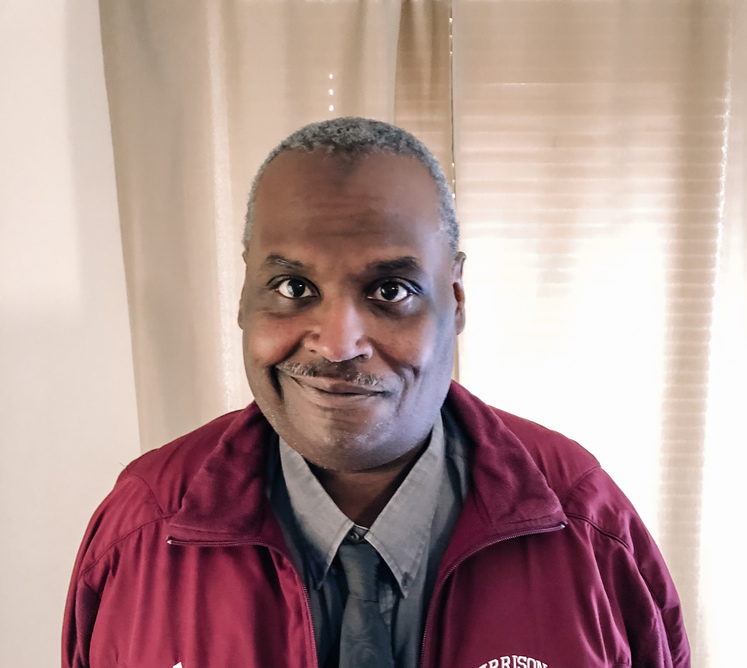
During Black History Month, communities across the country reflect on moments and individuals who helped shape local history. In Cynthiana, that story includes David Conner, whose lifelong commitment to service, mentorship, and community leadership led him to become the city’s first Black commissioner in 2000.
While the milestone holds historical significance, Conner speaks about it less as a personal achievement and more as a continuation of a life already devoted to Cynthiana, a place he has never considered leaving.
Born and raised in Harrison County, Conner describes his upbringing as deeply rooted in family, faith, and community connection. The youngest of four brothers and the son of Charles and Wilma Conner, he grew up surrounded by relationships that shaped his understanding of responsibility to others. Before holding public office, he was already investing in the community through coaching youth athletics- a role he’s maintained for decades.
For more than 30 years, Conner has coached and supported local student-athletes, while also serving as a commissioner for youth football programs for over three decades. Those experiences, he says, taught him lessons that later carried into public service: teamwork, accountability, and the importance of showing up consistently for others.
Professional life reinforced those same values. Beginning work at a young age with the Techau family, Conner built a career in the grocery business that would profoundly influence his leadership style. The fast-paced demands of managing operations and budgets required constant attention to detail and long-term planning.
One lesson, shared early in his career, remained with him: quality matters more than quantity. That philosophy became a guiding principle not only in his professional life but also in how he approached civic leadership.
Over time, the combination of community involvement and a growing desire to give back led him toward public office. His motivation, he explains, was never recognition or personal ambition. Instead, it was rooted in a hope that future generations- including his own son- would experience the same opportunities he had growing up in Cynthiana.
Remembering the 1997 Flood
One event continues to shape Conner’s perspective on leadership more than any other: the devastating flood of 1997.
He remembers not only the physical destruction but the emotional toll on families and neighborhoods, particularly in areas hardest hit by rising waters. Many of the neighborhoods most affected were home to long-established African American families whose roots in Cynthiana stretched back generations. When floodwaters rose, entire blocks changed almost overnight.
For many residents, rebuilding was not financially possible, and buyout programs led families to relocate, often outside the community entirely. In the years that followed, the city’s African American population declined significantly, altering the social and cultural fabric of Cynthiana.
Driving through affected streets afterward left a lasting impression. What appeared to outsiders as debris piles were, in reality, the contents of people’s lives- photographs, furniture, and family heirlooms placed along curbs after homes were damaged beyond repair.
Among the most painful losses, he recalls, were family Bibles that documented genealogy. “That wasn’t trash,” he reflected. “That was history.”
The experience reinforced his commitment to infrastructure improvements and flood mitigation efforts in later years, driven by a desire to prevent families from facing similar loss again.
A Historic Moment in Local Leadership
According to census data, approximately 5% of Cynthiana residents identify as Black. Conner's election in 2000 marked a significant and meaningful moment in the advancement of local leadership and representation.
In the years that followed, that legacy continued to evolve. In 2015, Jada Griggs became the first Black woman to serve as a Cynthiana city commissioner, expanding representation in local government. In 2025, with the election of Taylor Peoples, for the first time in the city’s history two Black commissioners served simultaneously.
For Conner, however, the meaning of that milestone became clearer only with hindsight. Rather than focusing on history itself, he recalls feeling most proud when he saw what the accomplishment meant to his family and to younger generations watching local leadership more closely.
Service Through Practical Work
Since returning to the City Commission in 2023, Conner has focused on areas of city government that often operate outside public attention- utilities, infrastructure, and public works. Improvements to drainage systems, water infrastructure, and city facilities stand among the projects he speaks about most frequently, not because they are highly visible, but because of their direct impact on residents’ daily lives.
He emphasizes that much of municipal work happens quietly, without recognition, yet remains essential to community stability. From working alongside crews during winter storms to advocating for infrastructure improvements, his approach reflects a hands-on style shaped by decades of teamwork and coaching.
“You’re only as good as the people you work beside,” he says, crediting city employees and supervisors for the progress made during his service.
Community Change and Growth
Over the decades, Conner has watched Cynthiana evolve. Growth, he believes, has brought new opportunity while also introducing new challenges- particularly the need for additional housing to support continued development.
He views local leadership as a collaborative effort rather than an individual role, comparing city government to a team sport. Success depends on cooperation among city officials, county leaders, economic development partners, and community organizations working toward shared goals.
In a small town, he says, leadership begins with visibility and connection, meeting residents face-to-face, listening to concerns, and helping newcomers feel welcome.
A Legacy of Encouragement
When asked what advice he would offer young people considering leadership roles, Conner does not point to politics or titles. Instead, he encourages them to discover what genuinely inspires them.
Find something that excites you, he says, something that gives you energy, and commit fully to it. Service, in his view, grows naturally from passion and care for others.
Much like his decades of coaching, the greatest reward comes not from recognition but from seeing others succeed. Former players and community members who return years later simply to reconnect remain, to him, the clearest measure of impact.
Continuing the Story
David Conner’s journey reflects a broader truth about local history: communities are shaped not only by landmark events, but by individuals who quietly dedicate their lives to service.
Through coaching, mentorship, professional leadership, and public office, his work has remained grounded in a simple goal- helping Cynthiana become the best version of itself for the generations that follow.